Human Bingo— how to play the UK icebreaker, with 115 questions and templates for work, school and weddings
Human bingo is the icebreaker where the people are the calls. Each square describes someone, and you have to find a person in the room who fits it. Below are the rules, 115 human bingo questions sorted by occasion, and a free human bingo template that prints a different card for everyone.
Each person can sign only one square on your card, so you have to talk to sixteen different people to fill it.
How to play human bingo, the UK icebreaker
Human bingo, also called people bingo, icebreaker bingo or "find someone who", turns the usual game inside out. There is no caller. Every player gets a card where each square describes a person: has been to Scotland, can whistle a tune, was born in winter. The players walk around the room and ask each other. When you find someone who fits a square, they write their name in it.
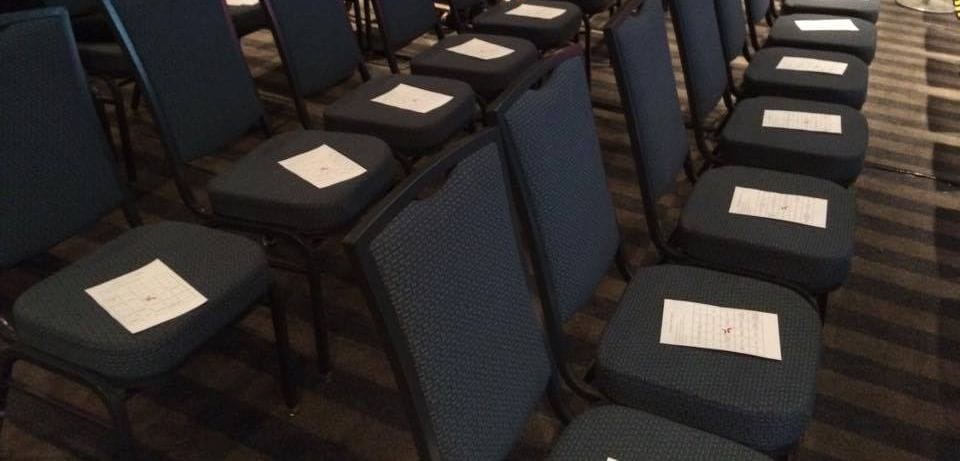
Bingo sheets on the seats before the opening session of Wikimania 2015 in Mexico City: a printed grid for every guest, as in human bingo. Original by an unknown author, CC0. Cropped.
Hand out cards and pens. Everyone plays, including the host if the group is small.
Explain the one rule. A person can sign only one square on your card. You can sign your own card for one square, or not at all; decide before you start.
Mingle. Ask, listen, and move on. Players can ask "which of these are you?" to speed things up.
Call bingo. The first player with a full line, across, down or diagonal, shouts "Bingo!"
Check and share. Read the line aloud and ask each named person to confirm. Then ask the room for the most surprising answer.
With 20 to 40 people and a four by four card, the first line usually comes in about ten minutes. For a smaller group, play for a full card or allow two signatures per person.
Free printable human bingo templates
The human bingo template below makes a different card for every player from the question list you choose, four by four, with no free square, since every square should be a conversation. Pick the list for your occasion, edit any question, set the title and press Print cards. Every card holds a different selection of 16 questions, so players are looking for different people, and nobody can copy their neighbour.
Sample cards are shown. Set the theme and number of cards, then press Make cards.
HUMAN BINGO
Has organised a work socialDrinks tea, not coffeeCommutes more than an hourStarted this yearLearned something new this monthReads on the trainHas trained a new starterHas worked in another countryHas had the same desk for a yearHas changed careerKeeps a plant on their deskCycles to workHas worked a night shiftBrings lunch from home every dayHas a job title nobody understandsHas a pet that has been on a video call
Card 1
HUMAN BINGO
Has worked in another countryStarted this yearBrings lunch from home every dayHas trained a new starterCommutes more than an hourDrinks tea, not coffeeHas shaken hands with a CEOHas a pet that has been on a video callHas worked here more than five yearsHas had the same desk for a yearHas changed careerHas worn fancy dress to workHas organised a work socialHas worked a night shiftHas been to a work Christmas party this decadeKeeps a plant on their desk
Card 2
HUMAN BINGO
Drinks tea, not coffeeHas run a marathonHas been on a team away dayReads on the trainHas trained a new starterWas a Saturday worker as a teenagerHas been to a work Christmas party this decadeHas a pet that has been on a video callCommutes more than an hourHas had the same desk for a yearSpeaks another language at homeStarted this yearKeeps a plant on their deskCan touch-typeHas presented at a conferenceHas worked in another country
Card 3
HUMAN BINGO
Has been to a work Christmas party this decadeHas changed careerHas a side projectHas trained a new starterKeeps a plant on their deskWas a Saturday worker as a teenagerBrings lunch from home every dayHas organised a work socialCan touch-typeHas run a marathonStarted this yearHas worked from a caféCommutes more than an hourDrinks tea, not coffeeHas worked here more than five yearsVolunteers outside work
Card 4
In UK offices and schools, most people print one of three templates: a filled card for work, a "find someone who" sheet for a class, or a blank grid. For a blank human bingo template, choose Blank cards and set the size to 4 × 4. Blank cards suit groups that write their own squares, such as a class asked to think of one fact about themselves, which the teacher collects and uses for the cards.
115 human bingo questions
The human bingo questions below are grouped by occasion. They are the lists the card maker uses, and you can copy them, mix them or use them as a starting point for your own. Each one is written to be true of some people in a group but not most, and safe to answer out loud.
Human bingo questions for work
For team days, inductions and office parties. They are about working life and interests, never about age, family plans, health or anything else that could make someone uncomfortable at work.
Has worked here more than five years
Started this year
Cycles to work
Has worked in another country
Has changed career
Brings lunch from home every day
Drinks tea, not coffee
Has presented at a conference
Was a Saturday worker as a teenager
Has a side project
Has worked a night shift
Has run a marathon
Has trained a new starter
Can touch-type
Has worked from a café
Has visited every office
Has a pet that has been on a video call
Has had the same desk for a year
Has organised a work social
Speaks another language at home
Learned something new this month
Has a job title nobody understands
Has been on a team away day
Commutes more than an hour
Volunteers outside work
Has worn fancy dress to work
Has been to a work Christmas party this decade
Keeps a plant on their desk
Has shaken hands with a CEO
Reads on the train
"Find someone who" questions for school
For the first day of term, a new class or a lesson that needs a warm-up. They suit key stage 2 upwards; for younger children, use pictures and play in small groups with an adult reading.
Has a pet
Has been on a plane
Has a brother
Has a sister
Likes broccoli
Can ride a bike
Has been to the seaside this year
Plays a sport
Has lost a tooth this year
Can swim a length
Likes reading comics
Was born in the summer
Has been to a museum
Can count to ten in another language
Walks to school
Plays an instrument
Has the same favourite colour as you
Has grown a plant
Has been camping
Likes maths
Has a birthday in December
Can do a handstand
Has made a cake
Has seen snow
Has read a book twice
Has a grandparent who lives far away
Can name three planets
Likes drawing
Has been to a football match
Knows a magic trick
Human bingo questions for weddings
For the drinks reception or the tables, where two families and several friendship groups meet for the first time. They are about the couple and the day, so guests find out how everyone else fits into the story.
Has known the bride since school
Has known the groom since school
Was at the couple's first holiday
Travelled more than 100 miles today
Has been a bridesmaid or usher before
Has been married more than 25 years
Caught a bouquet at a wedding
Can do the first dance steps
Is wearing something borrowed
Knows how the couple met
Has worked with the bride or groom
Is related to both families
Has given a speech at a wedding
Got married in the same month
Has been to more than ten weddings
Lives in the couple's home town
Has danced at a ceilidh
Has been to a wedding abroad
Brought a plus one
Has sung karaoke with the couple
Is the youngest guest at their table
Has a photo with the couple from 10 years ago
Arrived by train
Knows the couple's pet by name
Has shared a flat with the bride or groom
Human bingo questions for any group
General questions for parties, clubs, training days and community events.
Has been to Scotland
Can whistle a tune
Owns a dog
Was born in winter
Has broken a bone
Speaks two languages
Has met someone famous
Plays an instrument
Does not like chocolate
Can juggle
Has run a race
Is an only child
Has been on TV
Grew up by the sea
Loves spicy food
Is left-handed
Has read the same book twice
Has never flown
Can name every Beatle
Bakes bread
Has been to a bingo hall
Has a birthday this month
Has climbed a mountain
Can say hello in five languages
Has a houseplant with a name
Has swum in the sea in winter
Has been to a festival
Has more than two siblings
Has lived abroad
Can do a cartwheel
Writing good human bingo questions
The best squares are true for about one person in five. If almost everyone fits, such as "has been to London", the card fills in a minute; if nobody fits, the square is dead and the game stalls. Mix easy squares with a few rare ones, so that the last square on a line takes some finding.
AI
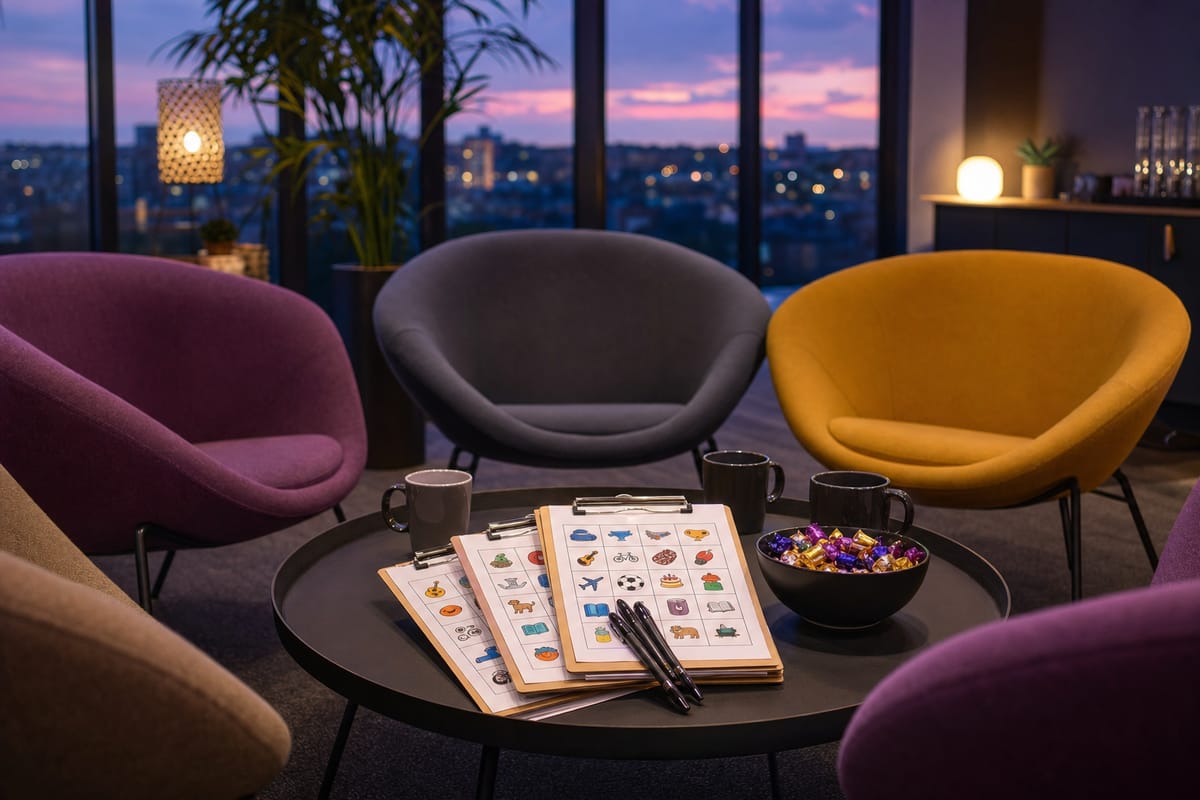
AI-generated image. A human bingo icebreaker ready to start: a card and a pen for everyone, and chairs to come back to afterwards.
Make them easy to ask. "Has lived abroad" is a quick yes or no, and leads to a good follow-up.
Keep them safe to answer in public. Nothing about health, money, relationships, religion or anything embarrassing. At work, avoid anything about age, family plans or background.
Avoid squares only one person fits, such as "is the manager". Everyone will go straight to them, and they will spend the game signing cards.
Use the group. A few questions about the team, the class or the couple, such as "has visited every office", make the card feel made for the day.
Playing human bingo online and on Teams
Human bingo works on a video call with one change: people cannot mingle, so use breakout rooms. Send the cards as a PDF before the meeting. Split the group into rooms of three or four for three minutes, where people ask each other the questions and type or write the names. Rotate the rooms two or three times, then come back together. The first player with a line reads out the squares and the names, and each person named confirms with a thumbs up.
For a quick version in a large meeting, put a question on the screen, ask everyone who fits to raise a hand, and let players note one name from the video grid. It is less of a conversation, but it still gets people talking.
Human bingo variations
Two truths bingo. Each person writes one surprising fact about themselves on a slip. The host builds the cards from the slips, and players have to find the person behind each fact.
Signature and story. The person who signs a square also adds one word about it, such as the name of the mountain they climbed. It slows the game down, in a good way.
Language bingo. In a French, Spanish or German class, write the squares in the language, and players must ask the questions in full sentences.
Called human bingo. For a seated group, the host reads the squares out one at a time, and anyone who fits stands up; players mark squares where someone at their table stood. It is quicker and suits a dinner. More games for parties and celebrations are on our party bingo page, and our Christmas bingo page has games for the office party.
FAQ
What is human bingo?
Human bingo is an icebreaker game. Each square on the card describes a person, such as "has been to Scotland" or "plays an instrument", and instead of waiting for calls, players walk around and find someone who matches each square. That person writes their name in it, and the first player with a full line or card wins.
How to play human bingo?
Give everyone a card and a pen. Players mingle, asking each other the questions on their card, and when someone fits a square they sign it. Each person can sign only one square on any card, so players have to talk to the whole room. The first to complete a line calls bingo, and the host checks the names.
What is people bingo?
People bingo is another name for human bingo, as are "find someone who" and icebreaker bingo. The rules are the same: squares describe people, and players collect a signature for each from someone who fits.
How to play icebreaker bingo?
Icebreaker bingo is human bingo used at the start of a meeting, class or event. Keep it to ten or fifteen minutes, use a 4 by 4 card so it can be finished, and after the winner is found, ask a few people to share the most surprising answer they heard.
How to play human bingo virtually?
Send the card before the call. Put players in breakout rooms of three or four for a few minutes at a time, where they ask each other the questions and note names. Rotate the rooms two or three times. Back in the main room, the first with a line reads out their squares and the names.
How does human bingo work?
The squares do the work. Each one is true of some people in the room but not most, so finding a match takes a few conversations, and those conversations are the point. The one-signature-per-person rule stops a player filling the card from one friend.
How to play find someone who bingo?
"Find someone who" is the classroom name for human bingo, and each square starts with those words: find someone who has a pet, who can ride a bike, who was born in the summer. Pupils ask each other in full sentences, which makes it a favourite for language lessons too.