Irish bingo: two games with one name
If someone in Ireland says they are going to the bingo, they mean the hall game: 90-ball bingo, played with tickets and a caller, usually in a parish hall, a GAA clubhouse or a community centre. If someone suggests a game of Irish bingo at a family party or in a pub, they probably mean the card game. The two have nothing in common except the name and the excitement of waiting for the last call.
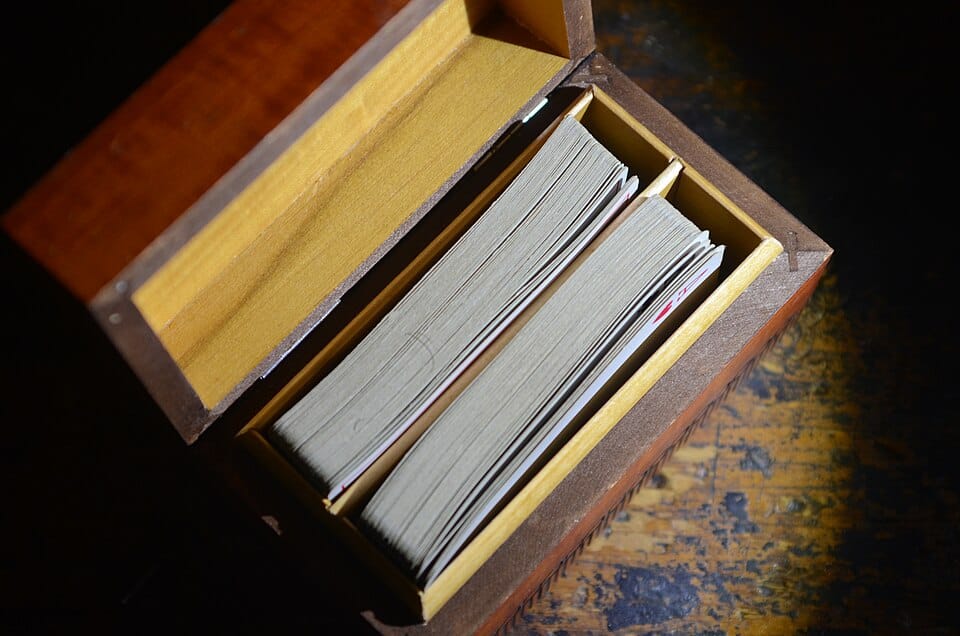
We cover the hall game first, briefly, because it follows the same rules as British bingo, and then the card game in detail, because it is less well documented and the rules vary from table to table.
Parish-hall bingo in Ireland
Bingo in Ireland grew up in parish and community halls, and for decades it has been one of the main ways of raising money for churches, sports clubs, schools and local charities. The game is the standard 90-ball game: tickets of three rows and nine columns, fifteen numbers each, and prizes for a line, two lines and a full house. The full rules are on our 90 ball bingo page.
What gives parish bingo its character is the setting. Sessions are often weekly, the players know each other, and the caller is usually a local volunteer rather than hall staff. Callers use the same traditional nicknames as in Britain, with local additions. Ireland has its own gambling laws and regulator, separate from the UK's, so the rules on licences and prizes for fundraising bingo there are not the same as in Great Britain.
Irish bingo with playing cards: the pub game
The other Irish bingo is a pub game and family game that needs nothing but two packs of ordinary playing cards. It is quick to learn, works for any age and any number of players from three upwards, and it is a good way of playing something like bingo when you have no tickets or numbers. The cards take the place of numbers: instead of waiting for 22 to be called, you wait for the seven of hearts.
You need two complete decks of 52 cards, ideally with different backs, and somewhere to play. One deck is dealt to the players, and the other belongs to the caller. Some groups play for small stakes such as coins in a pot; others play for sweets or just for the win.
Irish bingo rules, step by step
The Irish bingo rules below are the most common version. Families and pubs have their own variations, so agree the rules before you deal.
- Choose a caller. The caller does not play, or plays a hand of their own if everyone trusts them.
- Deal the first deck. Shuffle and deal all 52 cards evenly among the players, face up in front of each of them. Put any spare cards aside so that everyone holds the same number.
- Shuffle the second deck. This is the caller's deck. It must be complete and well shuffled.
- Call the cards. The caller turns up one card at a time and names it clearly: "the seven of hearts".
- Turn it face down. Whoever holds the matching card turns it face down. Exactly one player will hold each card, unless it was set aside.
- Call bingo. The first player to turn all their cards face down shouts "Bingo!" and wins the game.
Because every card is in someone's hand, every call means something to somebody, and the game moves quickly. With six players, each holding eight cards, a game rarely takes more than a few minutes. It is pure luck: the order of the caller's deck decides everything, and the only mistake you can make is failing to turn over a card that has been called.
Variations on the pub game
Most tables adapt the Irish bingo rules a little. Common versions include:
- Stakes per card. Each player puts a coin in the pot for each card they hold, and the winner takes the pot.
- A first-to-half prize. A small prize for the first player to turn over half of their cards, like the line in 90-ball.
- Choose your cards. Instead of dealing, players pick their cards from the deck, face up, a few each, before the calling starts.
- Suits only. For young children, deal only one or two suits and call from the same suits.
- Last player standing. Play on after the first winner to decide second and third places.
If you prefer a numbers game, you can also run a proper 90-ball game at home with our free bingo caller and a printed strip from our bingo tickets page.
What differs from the British bingo hall
For the hall game, very little differs. The tickets, prizes and calls in an Irish parish hall are recognisably the same as in a British hall, though the atmosphere is often closer to a club night than a commercial session, and the proceeds usually go to a local cause. The rules on who may run a game and what prizes may be offered follow Irish law, not the UK's Gambling Act 2005.
The card game is a different game altogether, closer to snap than to hall bingo, and it has no connection to the 90-ball rules or the calls. What it shares with bingo is the shape of the game: a random call, a match, and a race to be the first to complete everything you hold. If you are new to bingo itself, start with our guide to how to play bingo.