The 90 ball bingo rules in full
Learning how to play 90 ball bingo takes one game, because it is a race to mark numbers. There are ninety numbered balls, 1 to 90, and each one is drawn once, in a random order. Every player holds one or more tickets. As each number is called, you look for it on your tickets and mark it. The game has three prizes, awarded in order, and it carries on without a break from one to the next:
- One line goes to the first player to complete any single row of five numbers on a ticket.
- Two lines goes to the first player to complete two rows on the same ticket.
- The full house goes to the first player to mark all fifteen numbers on one ticket. It ends the game.
To win, you must claim, out loud and before the next number is drawn. The claim is checked against the numbers called, and if it is right the prize is yours. If two people complete the same stage on the same number, they share it. Those are the complete rules; everything else is either a house rule or etiquette.
The 90-ball ticket
A 90-ball ticket has three rows and nine columns. Fifteen of the 27 squares have numbers, exactly five on each row, and the rest are blank. The columns are ranged: 1 to 9 in the first, 10 to 19 in the second, and so on to 80 to 90 in the ninth. Numbers in a column run top to bottom in order.
Tickets are sold in strips of six that together hold all 90 numbers once. That is why a full strip marks a number on every single call. Our bingo tickets page explains how a strip is built and lets you print one, and the home page has a short illustrated guide to how to play bingo for complete beginners.
One line, two lines and the full house
The three wins make 90-ball more eventful than games with a single prize. The one line usually goes early, often somewhere between the 15th and 35th number in a busy hall. It is the smallest prize but the most frequent, and it keeps the room awake. A line can be any of the three rows; in 90-ball there are no columns or diagonals.
Two lines means two full rows on the same ticket. Rows on two different tickets do not count. It comes later, and the prize is larger. Then the game carries on to the full house, all fifteen numbers on one ticket, which is the main prize and ends the game. Older players sometimes call it "the house" or simply "house", which is also what you shout when you have it.
Each prize is paid only once per game, apart from ties. If you win the line, you are still in the game for two lines and the full house, and it is quite possible to win all three with the same ticket. Some halls run special games where only the full house pays, or add a bonus for a full house within a set number of calls; these are advertised before the game starts.
How to claim, and what happens next
The moment your ticket is complete, shout. "House!" is traditional for the full house; for a line, "Yes!", "Line!" or "Check!" all work. In a big hall you can raise your hand too. What matters is that you claim before the caller draws the next number, because in most halls a late claim is not accepted.
The game stops and a checker comes to your seat. They read your ticket's serial number or your numbers back to the caller, who checks each against the balls drawn. If everything matches, the claim is confirmed. If a number was marked in error, the claim fails and the game resumes; that is called a false call and it is not held against you. After the line is paid, the caller announces "we are now playing for two lines" and continues.
One rule surprises beginners: a missed win is lost. If your ticket completed a line on the 23rd number and you did not notice until the 26th, someone else may already have claimed, and even if they have not, the hall may refuse the late claim. Playing fewer tickets and watching them carefully beats playing more and missing wins.
How long a game of 90-ball takes
The number of calls a game needs depends mainly on how many tickets are in play. More tickets means a better chance that one of them completes early. We simulated games at different sizes to show typical numbers of calls for each stage:
| Tickets in play | One line | Two lines | Full house |
|---|---|---|---|
| 6 (one strip, family game) | 47th call | 67th call | 79th call |
| 60 (a club night) | 31st call | 54th call | 69th call |
| 300 (a busy room) | 24th call | 47th call | 63rd call |
| 1,200 (a large hall) | 19th call | 41st call | 58th call |
At a steady pace of a number every five seconds or so, that puts a hall game at around five to seven minutes and a small family game at six or seven. Online rooms call faster. The maths behind these numbers, and what they mean for your chances, is set out on our bingo odds page.
A session in a UK bingo hall
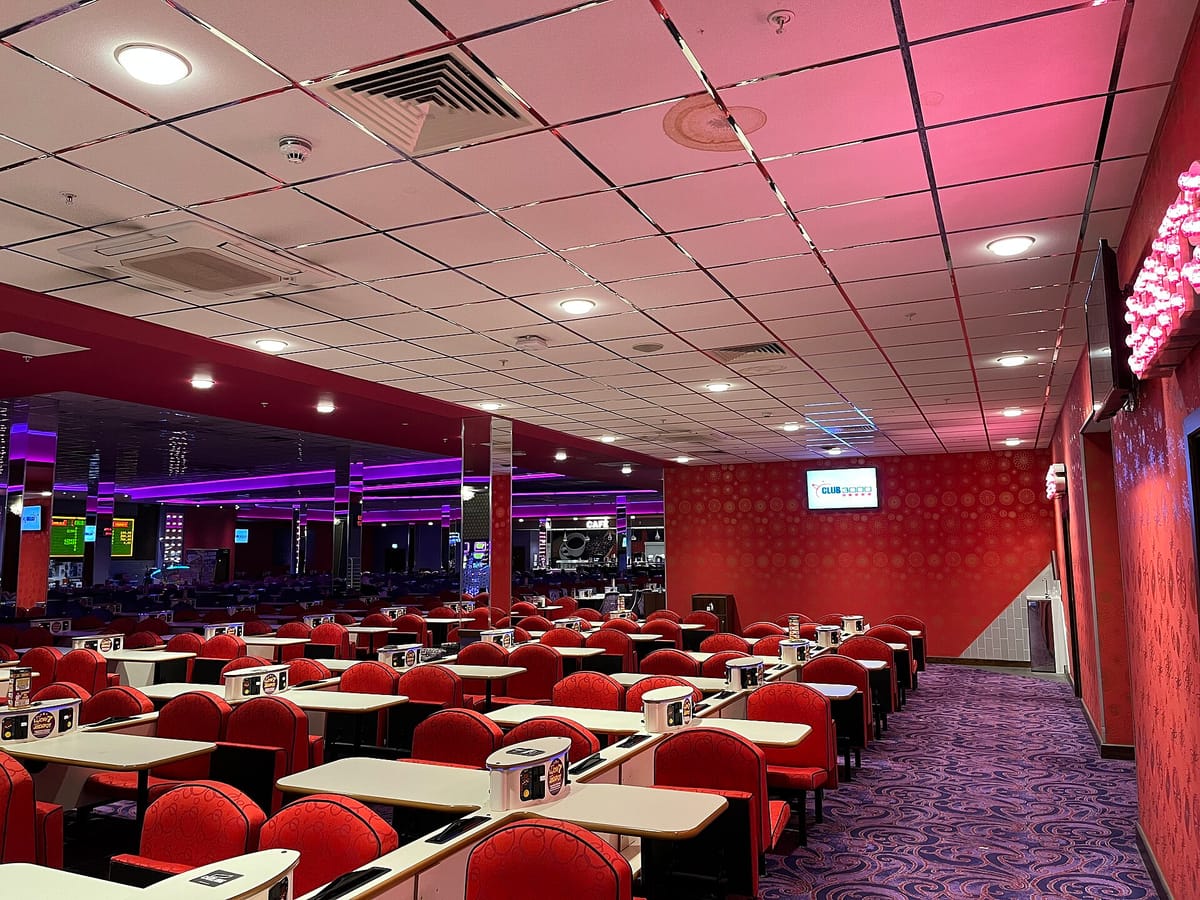
Hall bingo is organised in sessions, typically an afternoon and an evening session, each lasting a couple of hours with a break. You buy a book at the start, covering all the main games of the session, and can usually add extra games. The caller works through the programme game by game, announcing the colour of the ticket page for each and reading out every number, often with its traditional bingo call. Between the main games there may be mechanised or electronic games, and many halls have a café and bar.
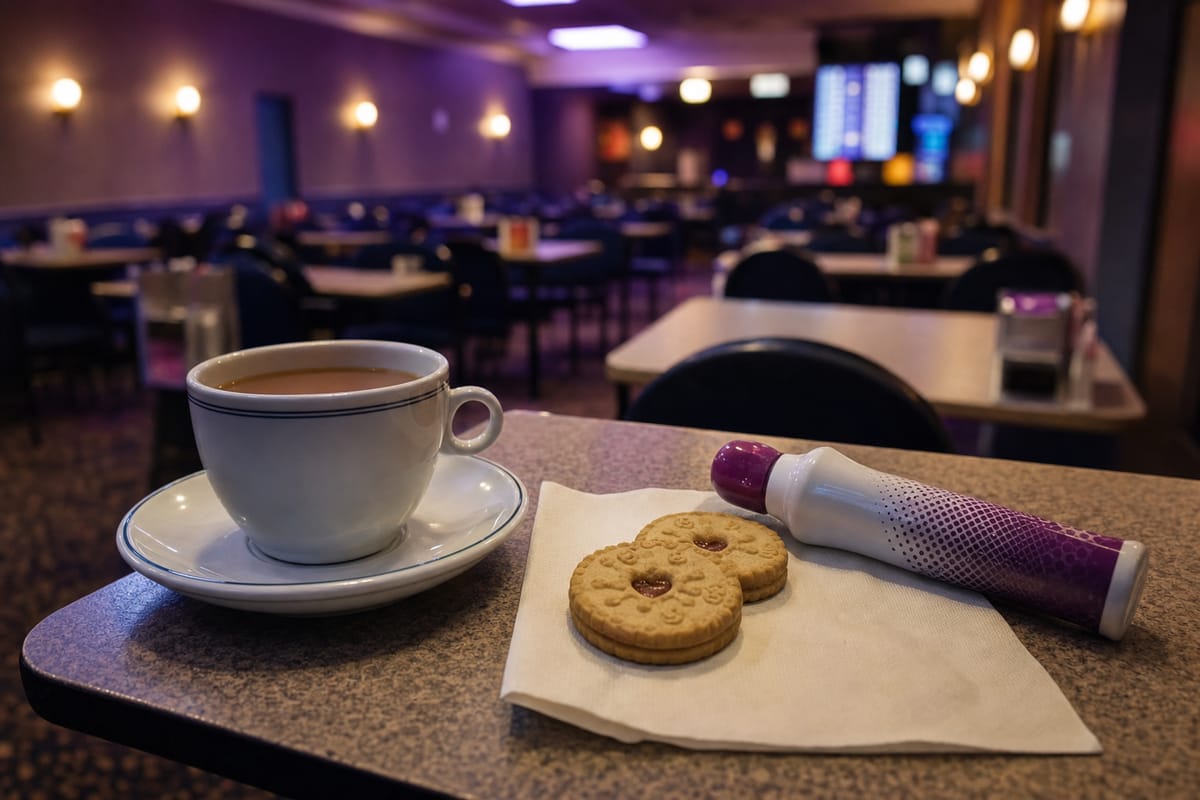
Games vary in prize and format across the session, but they are all played to the same 90 ball bingo rules described here. The biggest game, often called the national or the linked game, may be played simultaneously across many halls with a shared prize. Commercial bingo in Great Britain is licensed by the Gambling Commission and is for over-18s only.
Where 90-ball is played
90-ball is the bingo of Britain and Ireland. It is the game in commercial halls, social clubs, holiday parks, church and parish halls, and the main game of most British online rooms. In Ireland it is played in community and parish halls and often raises money for local causes; our Irish bingo page covers that tradition. The same game is played in Australia and New Zealand, where it is often called housie, and in parts of Europe and India as tombola or housie.
North America plays 75-ball instead, on a five by five card, with patterns in place of lines. It is a different game, and if you have only played one, the other takes a few minutes to get used to. Our 75 ball bingo page compares the two directly.
Close relatives: 80-ball and speed games
Some online rooms offer shorter games. 80-ball uses a four by four card and often has prizes for single lines, the four corners and the full card. 30-ball, sometimes called speed bingo, uses a three by three grid and finishes in a minute or two. Both borrow the idea of a full house from 90-ball, but the tickets and the odds are quite different, and neither is played in traditional UK halls.